Windu Bumi
Enterprise Experience Research & Strategy Lead
12+ Years Simplifying Enterprise & Operational Complexity
Unifying Product Ecosystems
& Governance Post-Merger
Role: Experience Design Strategy Lead | Company: Neogen Corp

Quick Facts
Role: User Experience Design Lead
Company: Neogen Corporation
Scope: Platform evolution and unification post-acquisition
Impact: +20% delivery speed and established research-backed safety guardrails
The Challenge
Neogen inherited three disjointed product ecosystems, running on rigid, engineering-led frameworks, siloed product teams, and UX was treated as a late-stage support function brought in just to paint over pre-locked technical decisions.
Why This Mattered
-
Lab operators rely on absolute precision
-
Multiple disconnected platforms with conflicting interaction patterns, create cognitive friction, risking safety
-
Without an upstream strategy gate, the company was burning resources building complex features that users didn't actually need, piling up millions in technical debt
My Role
-
I led the early discovery, research, and service mapping to transform the platform into a unified ecosystem
-
I shifted the internal culture from tech-first to research-driven, establishing UX as a core strategic partner across Product and Engineering
Key Insight
The messy UI was just a symptom of a fragmented process. By leading with deep user research, we mapped the lab operators' workflows, and translated them into a shared governance framework. This gave our engineering and product teams a unified language, eliminating cross-functional friction and stopping feature bloat before code was ever written.
Approach
1. Introduce Upstream "Should We Build It" Gates
Embedded design-led research and collaborative discovery workshops to map out the ideal customer journeys, aligning them with internal employee experiences, against business goals, with real operational constraints, making sure we validated the problem space before writing code.
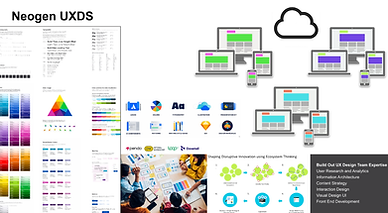
2. Establish Centralized UX Governance
To bring order, I built a scalable design practice driven by research-backed product strategy. Standardized interaction patterns and guardrails now served as the single source of truth across all global platform teams.
3. Rough & Rapid Validation
Introduced targeted design sprints and usability testing to refine safety-critical device GUIs, ensuring error-prevention in high-stakes environments.


Transformation
From: A fragmented landscape of independent platforms, system-driven backend architectures, and reactive design support.
To: A unified, research-driven product ecosystem with a standardized process playbook, centralized governance, and a 20% faster development queue.

Impact
-
+20% acceleration in development cycle time through improved stakeholder alignment and governance
-
Safety-Critical Optimization: Implemented error-prevention patterns for high-stakes environments
-
Strategic Shift: Established Design as a core partner in product decision-making and roadmap definition
What This Work Enabled
-
Saved millions in potential technical debt by auditing complex backend architectures and validating safety-critical patterns through rough and rapid design iterations before engineering began.
-
Successfully shifted company culture from engineering-led to research-driven, cementing UX as a core partner in product strategy and roadmap definition.


